Working application examples
Business processes turned into software you can actually try.
These are not stock mockups. They are working application examples built to demonstrate how I approach operational software: understand the process, model the data, make the workflow visible, and connect the pieces into one usable system.
AI-assisted dispute management
FeudFix
From a messy complaint to a managed case.
FeudFix demonstrates an AI-enabled workflow built around a conventional business application. A user starts with a problem in ordinary language. The application structures the intake, identifies the company, organizes evidence, supports policy research and correspondence, and keeps the case moving through a timeline.
The important part is the boundary between AI and ordinary software. Language-model work is useful for research, extraction, drafting, and analysis. Case state, evidence, messages, user actions, and workflow still need a reliable application around the model.
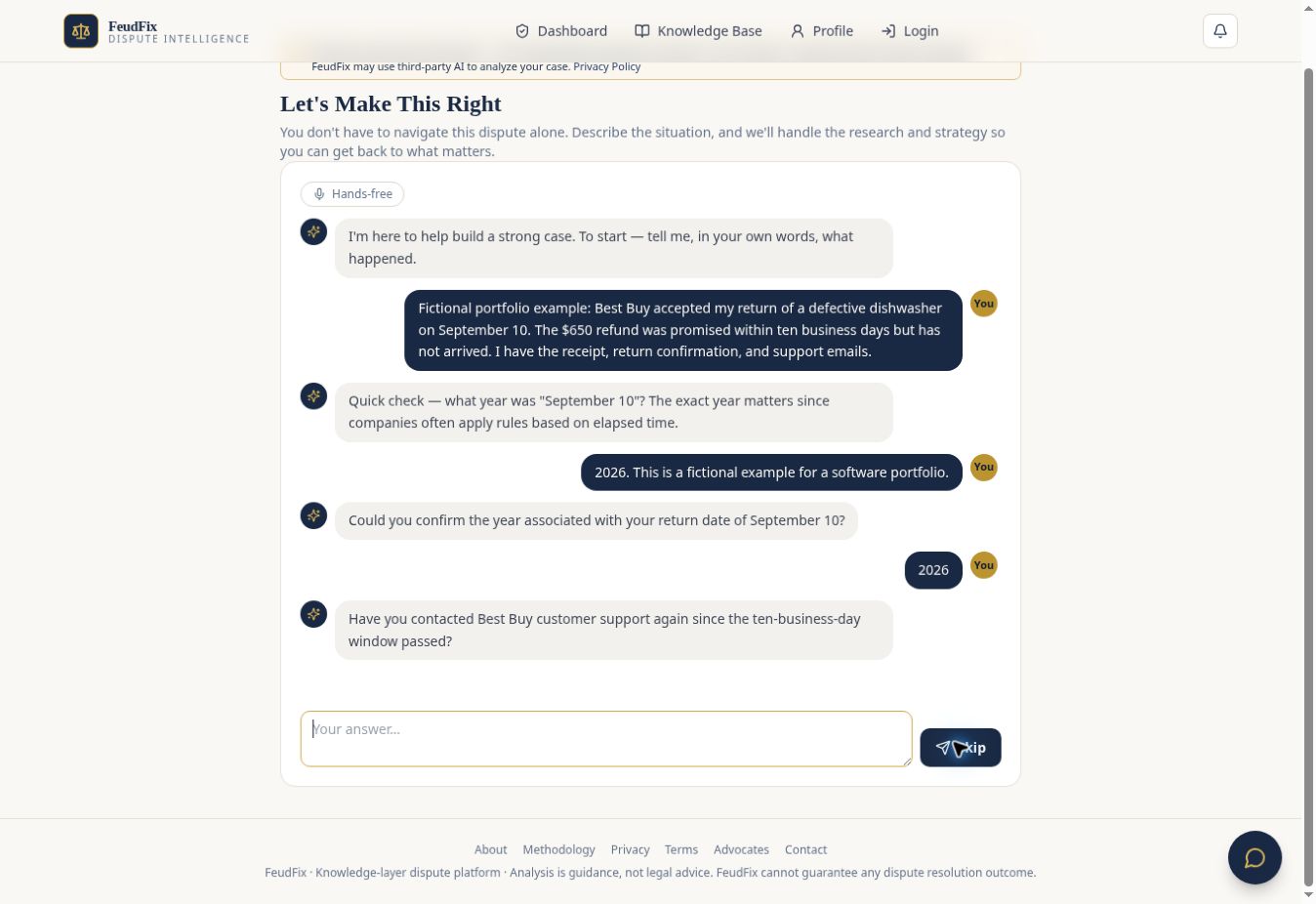
Technical profile: Python/FastAPI services, PostgreSQL-backed case records, React interface, REST endpoints, and LLM-assisted intake and drafting. My role: requirements, data model, architecture, development, integration and demonstration. Result demonstrated: unstructured complaints become trackable cases with evidence and correspondence workflows.
Demonstrates: conversational intake, AI integration, evidence handling, case tracking, research workflows, correspondence, and status management.
Field service operations
SVCpro
A service call is a workflow, not a row in a spreadsheet.
SVCpro models the operational path from a customer request through scheduling, technician assignment, work completion, and billing readiness. The application keeps the customer, job, technician, timing, status, and operational history connected instead of scattering them across separate tools.
This is the kind of application where the data model and workflow have to agree. A dashboard is useful only if the underlying statuses mean something, and automation is useful only if it moves work to the right person at the right time.
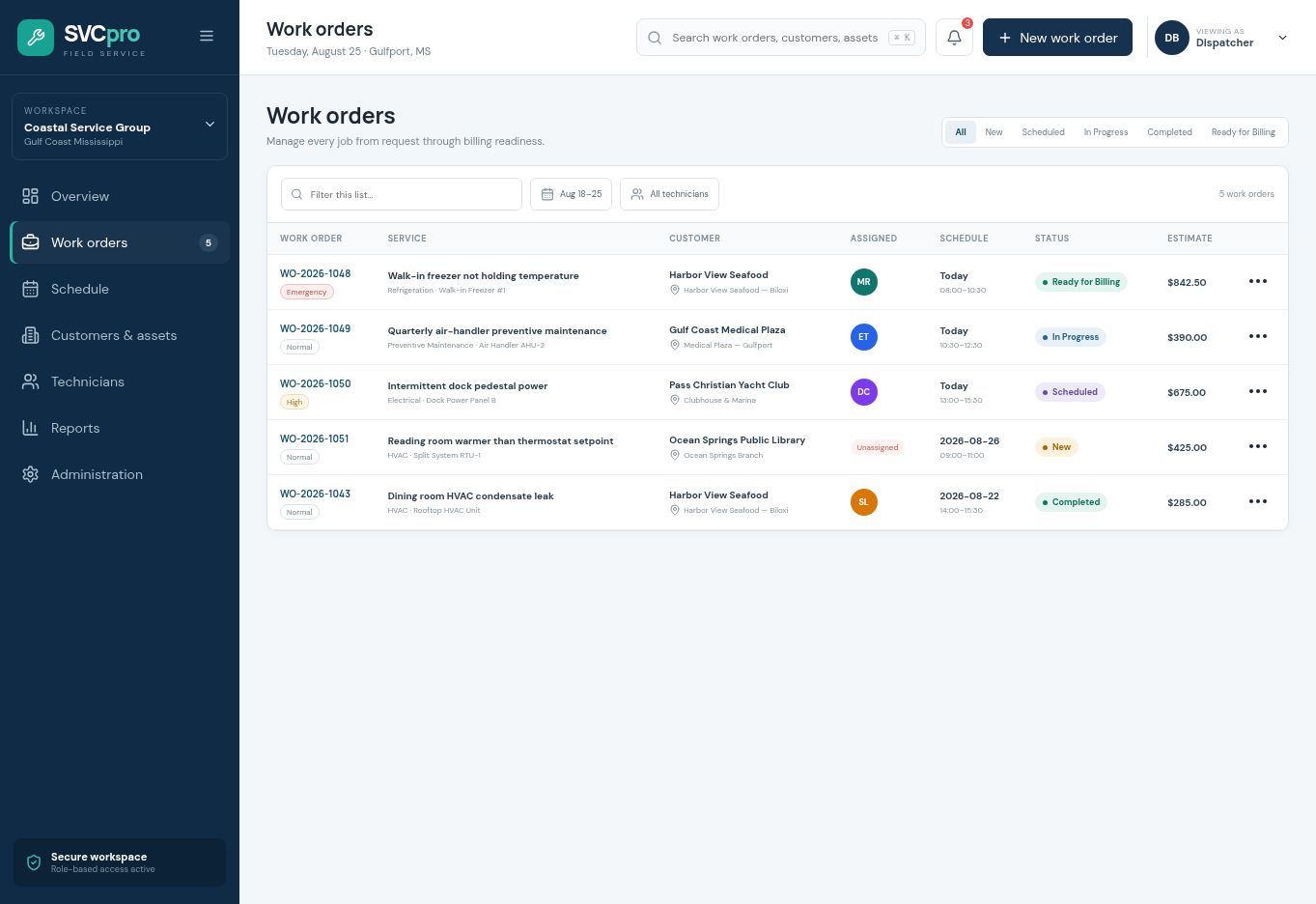
Technical profile: Python/FastAPI, PostgreSQL, React, REST APIs and state-driven business workflow. My role: business-process modeling, database architecture, application development and demonstration. Result demonstrated: work orders follow a defined path from request through scheduling, assignment, completion and billing readiness.
Demonstrates: customers, work orders, scheduling, technician assignments, workflow status, operational dashboards, and billing readiness.
Legacy software modernization
LegacyBridge
Modernize without pretending the old system has no value.
LegacyBridge demonstrates a common modernization problem: important inventory and customer data lives in an older system, while the business needs a cleaner modern workflow. The example connects a simulated legacy inventory source to modern order entry, inventory validation, customer data, and synchronization.
Real legacy projects are rarely solved by rewriting everything at once. The useful questions are what the old system knows, what still works, what creates risk, and where an API, integration layer, staged migration, or replacement will produce the most value with the least disruption.
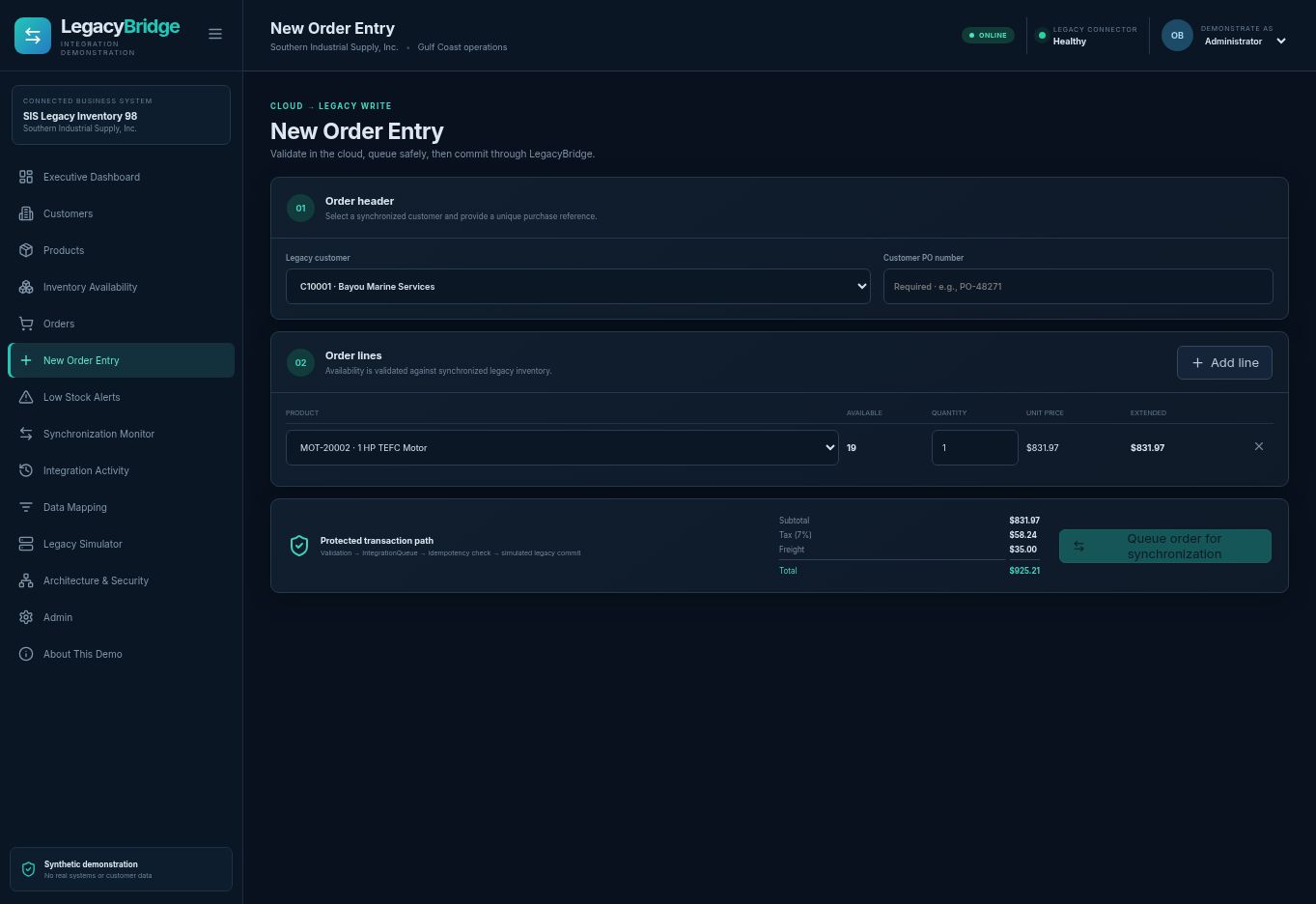
Technical profile: Python/FastAPI integration endpoints, PostgreSQL and React, with a simulated legacy data source. My role: integration architecture, data-model mapping, interface development and validation workflow. Result demonstrated: modern order entry checks legacy inventory and synchronizes operational data.
Demonstrates: legacy integration, inventory validation, customer and order data, synchronization, migration thinking, and staged modernization.
Client document workflow
ClientVault
Turn document chasing into a visible process.
ClientVault demonstrates a client-service workflow where the real problem is not file storage. It is knowing what has been requested, what the client submitted, what still needs review, what is missing, and who needs to follow up.
The application connects document requests, submissions, review status, and follow-up in one workspace. This same pattern appears in accounting, legal work, insurance, onboarding, compliance, lending, consulting, and any business where a job stalls because information is missing.
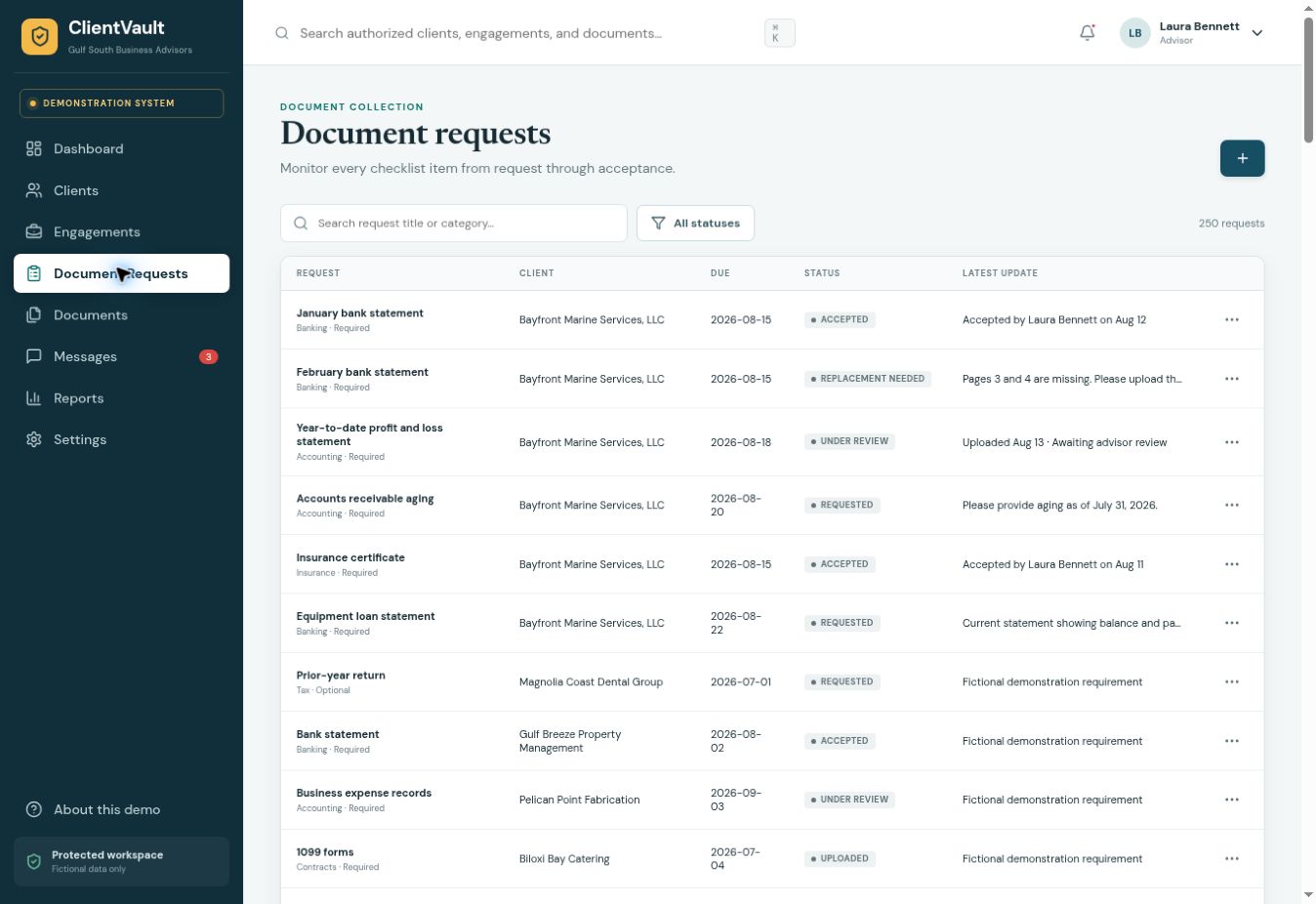
Technical profile: Python/FastAPI, PostgreSQL, React, REST APIs and document-centered workflow. My role: process analysis, data model, application architecture and development. Result demonstrated: document requests, submissions, missing items and reviews become visible and trackable.
Demonstrates: document requests, client submissions, review queues, status tracking, follow-up, and information-centered workflow design.